
SPEED INTELLIGENCE SYSTEM
Bring us your speed problem.
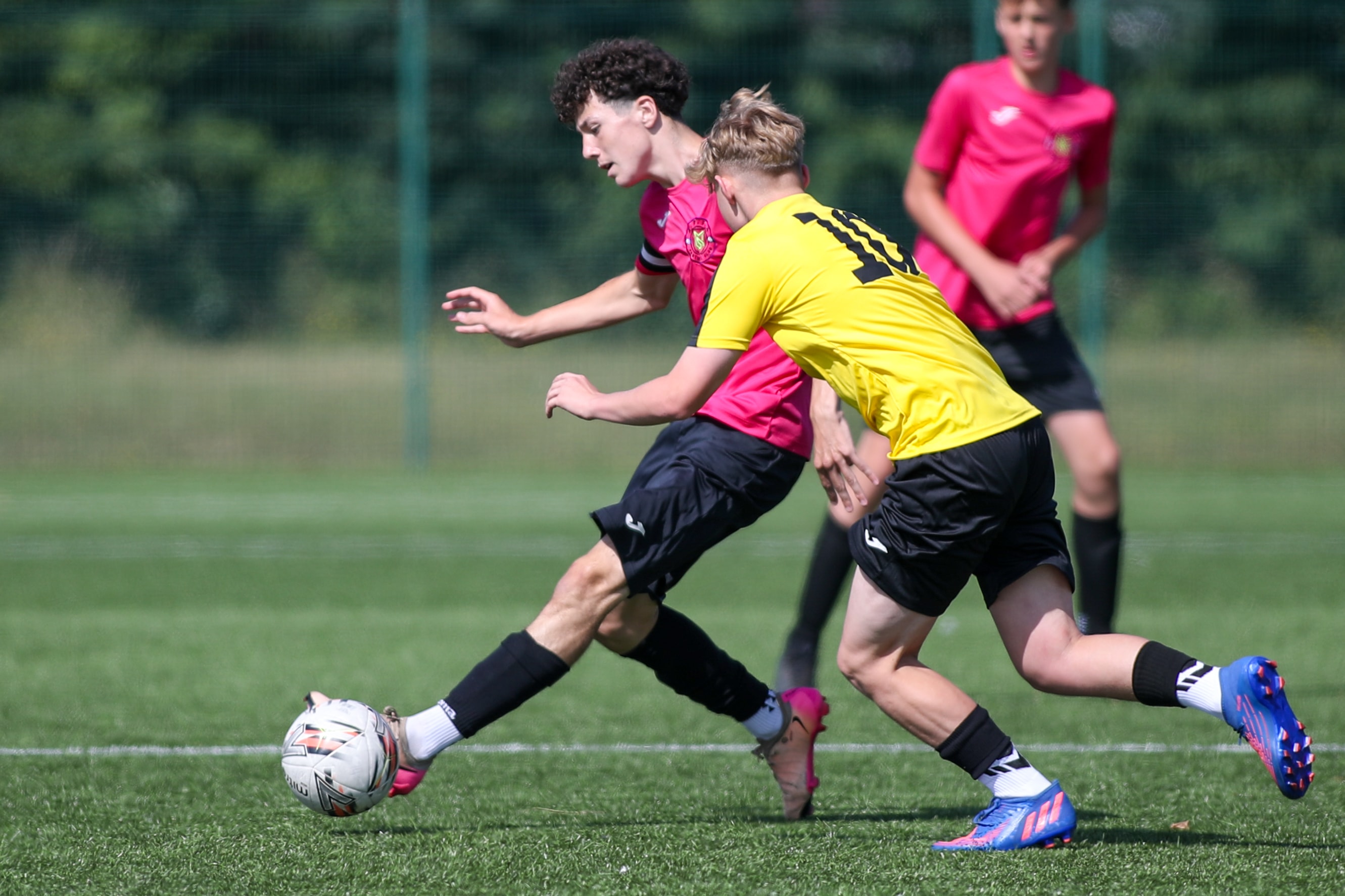
Speed is revealed through action. SIS helps coaches investigate what they're actually seeing — and test whether their interventions transfer to the game.
We serve cookies on this site to analyse traffic, remember your preferences, and optimise your experience.
THE FRAMEWORK
Three layers. One system.
Speed isn't one thing. It's an interconnected ecosystem — and the problem rarely lives where you think it does.
PLAY
Speed is revealed through action. The environment creates the demand.
BRAIN
Before movement changes, information changes. The coach's objective is to keep Perception and Action coupled.
BODY
The body expresses the solution.
PLASTIC COORDINATION — The capacity to reorganise movement in response to changing information. This is the bridge between Brain and Body.
THE COACHING CYCLE
Observe. Diagnose. Prescribe.
The question comes before the intervention. Every time.
NOTICE
Something breaks down in the action
ASSUME
First interpretation forms
QUESTION
Challenge the assumption
OBSERVE
Watch the action again, deliberately
CONNECT
Play ↔ Brain ↔ Body
HYPOTHESISE
Form a testable explanation
INTERVENE
Design a representative session
REASSESS
Repeat the original observation
TRANSFER
Does it show up in the game?
LEARN
Record what changed
NEXT QUESTION
The cycle continues
SIS DATA
of coaches believe speed is more than physical
say their environment is what stops them developing it
of variation in 10m sprint performance moved with one number
500 Speed Reflection data — 40+ coaches. 1-2-1 client data — 48 athletes.
One sprint number can't classify an athlete.
READING THE SIGNALS OF SPEED
What are you actually seeing?
Every limiter leaves a trace in the action. These are the observable signals — not player classifications.
Force
The capacity to produce and absorb ground reaction force rapidly.
Short ground contact, low acceleration out of change of direction, heavy footfall
Stiffness
Elastic energy storage and return through the kinetic chain.
Slow top-end speed, flat-footed contacts, loss of bounce in repeated sprint efforts
Rhythm
Temporal organisation of movement cycles.
Inconsistent stride pattern, inability to sustain speed, poor flow between actions
Timing
Synchronisation of movement with environmental events.
Late to the ball, poor anticipation of play, movement initiated after the cue
Perception → Action
Information pickup that directly shapes movement.
Hesitation before action, scanning without acting, movement decoupled from the game
SIS Practitioner Framework — useful framework, not established science. These overlap. They are not a profile.
THE PRINCIPLE
Play creates the problem.
Brain finds the solution.
Body expresses the solution.
ABOUT CHRIS CHAPMAN
Practitioner-led. Evidence-aware.
S&C coach and speed development specialist. SIS is built from real coaching cycles — 48 athletes, 40+ coaches, and a commitment to investigating the problem before prescribing the solution.
About Chris →Coaches surveyed
Athletes in dataset
Coaching cycles
Podcast appearances
MEMBERSHIP
You've identified a possible speed problem.
Membership helps you investigate and work through it. Full SIS access, Session Design Builder, and monthly case releases.
Cancel anytime. No commitment.
Free Resources
Free tools to sharpen your coaching eye
Download frameworks and guides from Chris Chapman — no sign-up required.